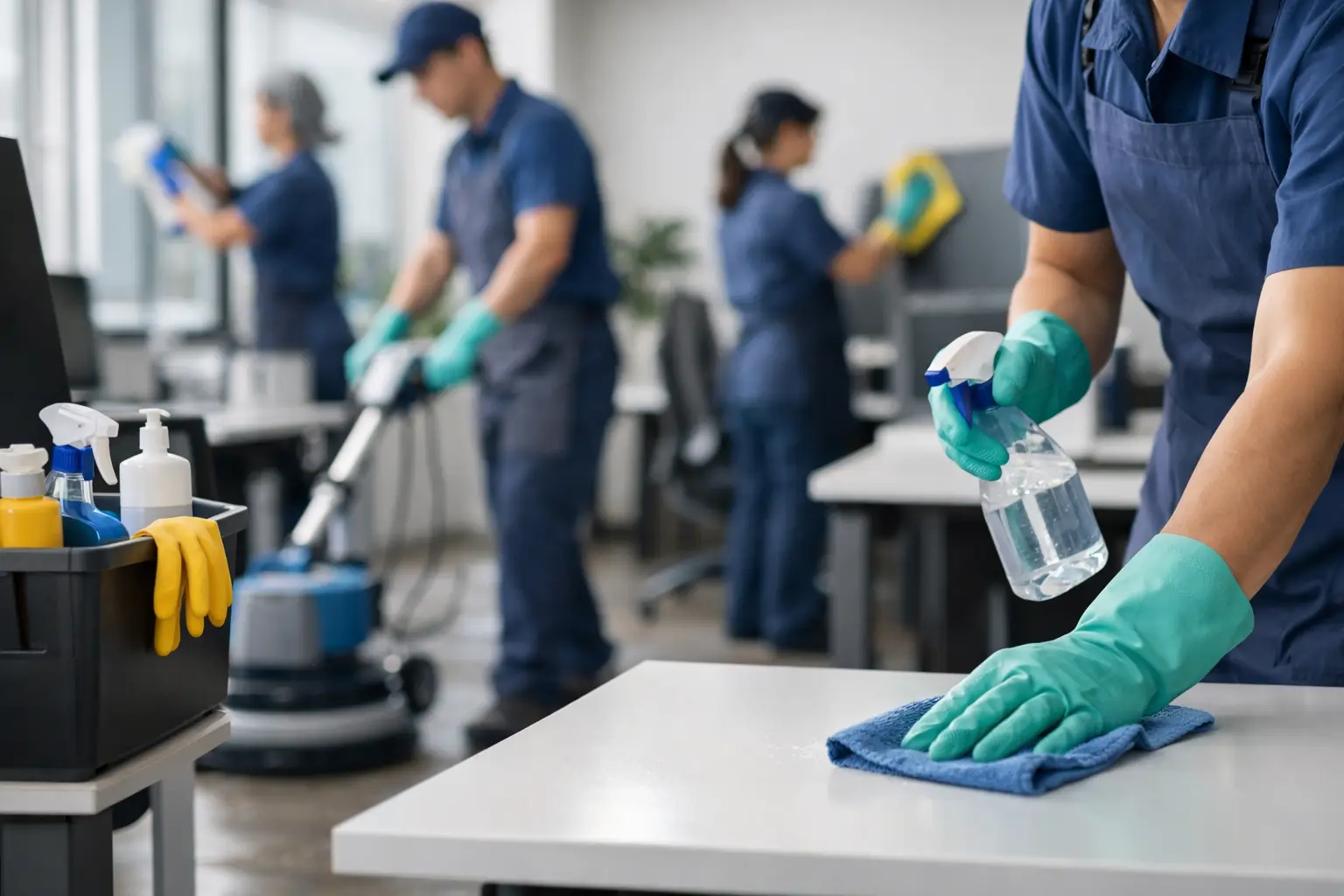
Commercial Deep Cleaning for Workplaces
A workplace can appear tidy while still carrying the build-up that affects hygiene, presentation and the condition of its finishes. High-touch points, skirting, vents, upholstery, washrooms and neglected corners do not receive the same attention during a routine visit. Commercial deep cleaning addresses those areas methodically, giving facilities teams a practical way to reset a site without interrupting its day-to-day operation.
For offices and commercial premises, this is not simply a more intensive clean. It is a planned facilities activity that supports employee confidence, visitor experience and the long-term care of the building. The right scope, timing and controls matter as much as the cleaning itself.
What commercial deep cleaning involves
Commercial deep cleaning is a detailed, site-specific service designed to remove ingrained soil, residue and contamination from areas outside the normal cleaning schedule. It usually works alongside a regular contract rather than replacing one. Daily cleaning maintains standards; periodic deep cleaning restores the harder-to-reach areas and surfaces that gradually deteriorate under constant use.
The exact programme depends on the building, its occupancy and the type of work carried out there. A busy City office with client meeting rooms has different priorities from a newly refurbished workplace, a shared office floor or a specialist IT environment. A proper assessment should establish which surfaces need attention, how they should be treated and when the work can be completed safely.
Typical areas include washrooms, kitchens and breakout spaces, lifts, stairwells, reception areas, meeting rooms, carpets, hard floors, internal glass and high-touch surfaces. The work may also cover detailed cleaning around furniture, beneath accessible equipment, inside cupboards or behind fixed items where practical. In some sites, specialist tasks such as stone cleaning, carpet extraction, hard-floor maintenance or computer and IT-equipment cleaning should form part of the same planned programme.
When a workplace needs a deep clean
A deep clean is often most effective when it is scheduled before standards visibly decline. Facilities managers may plan one around a lease event, office move, refurbishment, seasonal change or an increase in occupancy. It can also be appropriate after building works, prolonged reduced use, a high-profile event or an incident that requires enhanced cleaning.
There are also everyday signals that routine cleaning alone is no longer enough. Persistent odours in washrooms or kitchen areas, dull hard floors, marked carpet traffic lanes, residue around taps and dispensers, dust around vents, or a reception area that no longer reflects the expected standard are all worth investigating. These signs are not always a failing of the daily team. They often show that the current cleaning specification needs a periodic, more detailed intervention.
In Central London workplaces, timing can be particularly important. Buildings may have restricted loading access, shared lifts, security procedures, concierge requirements or narrow windows for contractor activity. An experienced provider will plan access, equipment movement, waste handling and supervision before work begins, rather than treating these requirements as an afterthought.
Start with a scope, not a generic checklist
The strongest deep-cleaning programmes are built around the site rather than a standard list of tasks. A walk-through should identify the areas of highest use, the finish types present, any existing damage, sensitive equipment and operational constraints. It should also confirm what is excluded, so there is no uncertainty once the team arrives.
For example, carpet cleaning may require a drying period and furniture movement. Hard-floor work may need a section of the office to remain out of use while the surface is treated and allowed to cure. Cleaning a boardroom filled with technology requires a different method from cleaning an empty meeting space. These details affect the schedule, the equipment selected and the controls needed to protect the premises.
A clear scope should set out the locations, surfaces, methods and expected outcome. It should identify work that needs specialist products or machinery and define whether areas will be cleaned during office hours, out of hours or in phases. For larger premises, zoning the programme helps keep essential parts of the workplace available while work progresses elsewhere.
Communication is equally useful. Reception teams, security, building management and employees should know where work is taking place and whether they need to remove personal items or avoid a particular area. A well-managed project feels orderly because the operational questions have been resolved in advance.
Hygiene, safety and care for the building
Deep cleaning should improve hygiene without creating unnecessary risk for people or materials. That requires trained operatives, correct product dilution, suitable machinery and an understanding of how different surfaces respond to treatment. Using an unsuitable chemical on natural stone, applying excess moisture to flooring, or cleaning IT equipment with the wrong method can create a larger facilities issue than the one being addressed.
Risk assessments and method statements should reflect the actual site. This includes safe access arrangements, wet-floor controls, electrical safety, manual handling, chemical use and segregation of work areas. Products should be managed in line with COSHH requirements, with safety data and procedures available where required.
For hygiene-sensitive spaces, the service should focus on thorough physical cleaning first. Removing soil and residue gives subsequent disinfection processes a better foundation. Where enhanced disinfection is appropriate, it should be selected for a defined need and delivered using a method suited to the environment, whether that is a washroom, shared workstation area or communal space.
Environmental responsibility also belongs in the plan. It may mean choosing effective products with a reduced environmental impact, using water and chemicals carefully, maintaining equipment properly and avoiding unnecessary waste. The best approach is not to use the most product. It is to use the right method, in the right quantity, for the surface in front of the operative.
Quality control turns a one-off job into accountable service
A deep clean can look impressive at handover, but the standard needs to be checked systematically. Quality control should include a supervisor inspection, completion records and clear reporting of anything that could not be addressed, such as inaccessible areas, pre-existing stains or damage requiring repair.
Photographic records can be useful for larger projects, particularly where a building manager needs evidence of work completed across multiple floors. They are not a substitute for inspection, however. The key question is whether each area has achieved the agreed standard and is ready for employees, visitors or the next stage of a project.
This is where partnership matters. A provider should highlight recurring issues rather than repeatedly treating the symptom. If marks return quickly on a particular floor, the answer may be a maintenance programme, improved entrance matting or a revised routine. If washrooms require frequent intervention, consumables, footfall patterns or cleaning frequencies may need to be reviewed. Good facilities support reduces the administrative burden by bringing practical recommendations with the evidence behind them.
Choosing the right frequency
There is no single interval that suits every commercial property. A high-footfall office with shared kitchens, frequent client visits and intensive meeting-room use may benefit from a targeted deep clean several times a year. A smaller, lightly occupied workplace may need focused seasonal work alongside a strong routine specification. Refurbishment, post-build dust and changes in occupancy can all justify additional attention.
It is usually more effective to combine planned periodic work with targeted interventions than to wait for a full-site reset. For instance, washrooms and kitchen areas may need detailed cleaning more frequently than executive offices, while carpets and floors may be scheduled according to footfall and finish condition. This approach protects presentation without taking more of the building out of service than necessary.
The cleaning provider should review the programme after the first visit. If the work identified recurring pressure points, the ongoing contract can be adjusted to prevent them from becoming a larger issue. That makes deep cleaning an operational investment, not a reactive task added only when complaints arise.
A practical reset for busy premises
Commercial deep cleaning is most valuable when it is tied to how a building is actually used. It restores overlooked areas, protects finishes, supports hygiene standards and gives managers documented confidence that the premises have been properly prepared.
For facilities teams, the next useful step is to walk the building with fresh eyes: start at reception, follow the employee journey through shared spaces, and look closely at the areas routine cleaning cannot fully reach. A clearly defined deep-cleaning plan can turn those observations into a workplace that is ready for the people who rely on it every day.