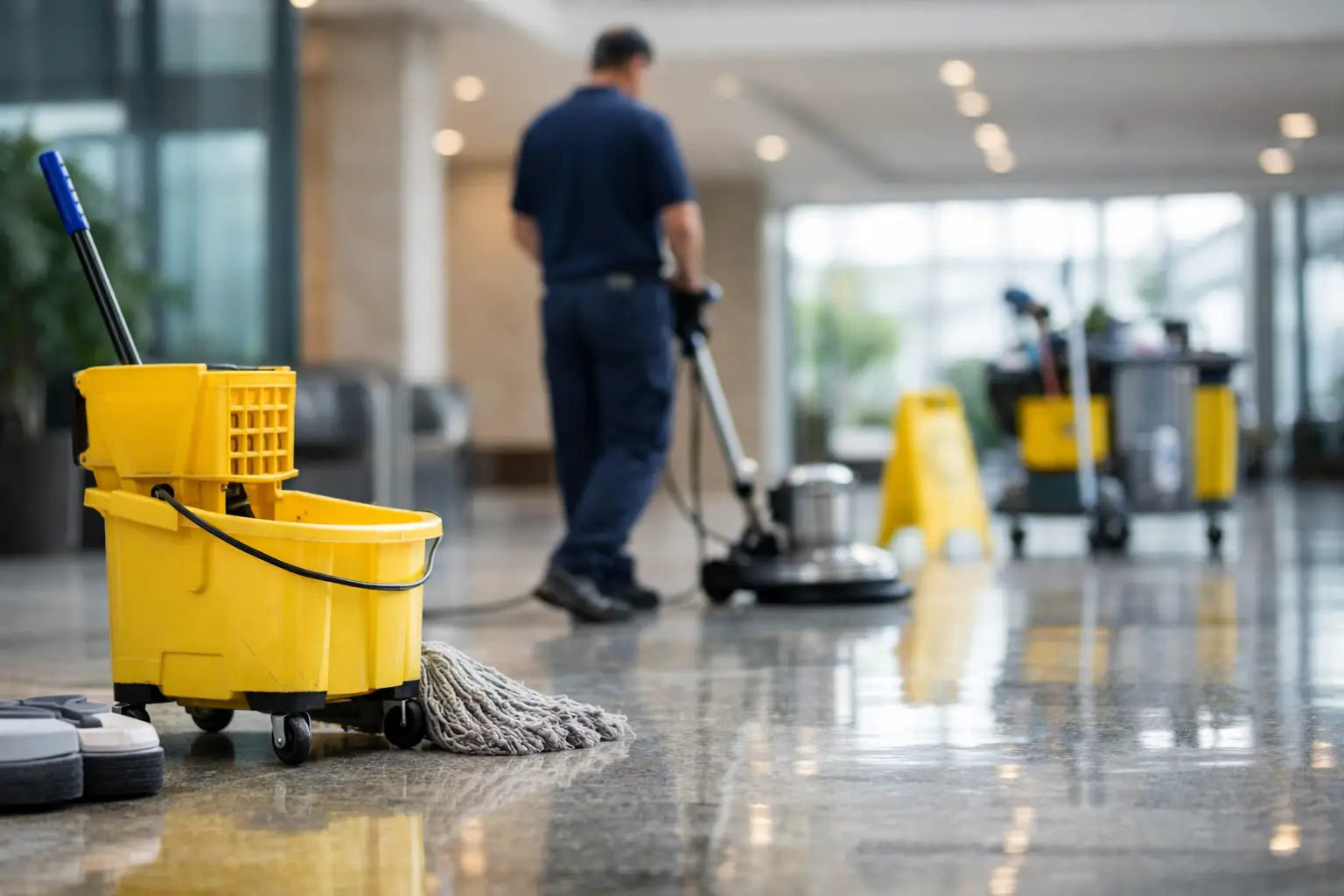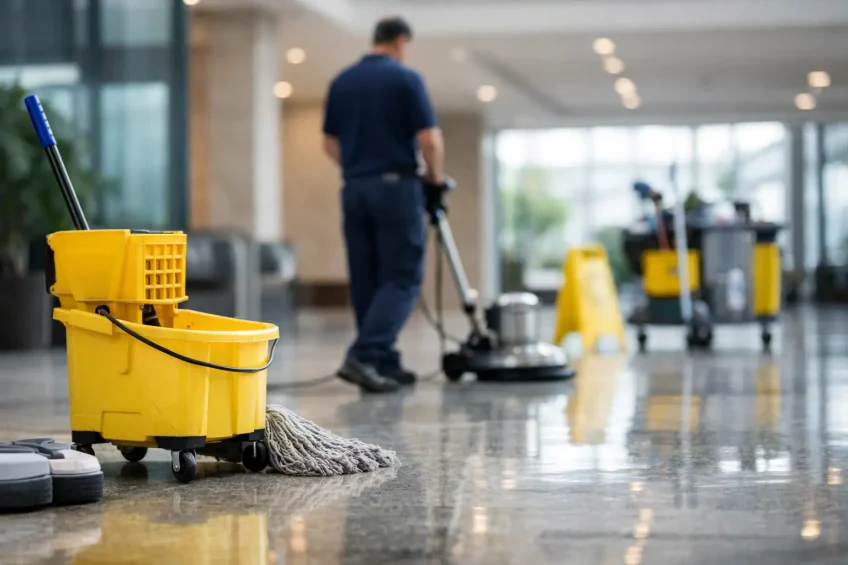
Hard Floor Maintenance for Commercial Premises
A scuffed entrance floor, dull vinyl in a busy office corridor or ingrained dirt around lift lobbies can alter how a workplace is perceived before a visitor reaches reception. Effective hard floor maintenance is not simply about restoring shine. It is a planned facilities service that protects a significant building asset, reduces slip risks and keeps commercial premises ready for employees, clients and contractors.
For facilities and operations teams, the challenge is balancing presentation with practicality. Floors need to withstand daily footfall, wheeled equipment, spillages and seasonal dirt while remaining safe and manageable within an operational building. The right programme depends on the surface, how the space is used and the standard the organisation needs to maintain.
Why hard floor maintenance needs a planned approach
Hard flooring is often selected for its durability, but durable does not mean maintenance-free. Vinyl, linoleum, safety flooring, stone, ceramic tile, wood and rubber all respond differently to moisture, abrasion, cleaning chemicals and mechanical cleaning. A one-size-fits-all routine can leave residue, wear down protective finishes or fail to remove soil from textured surfaces.
Daily cleaning removes loose dust, grit and surface contamination. That matters because grit acts like an abrasive under shoes, chair castors and trolley wheels. Over time, it creates scratches, dull patches and premature wear, particularly at entrances, circulation routes and areas around kitchens and washrooms.
Periodic maintenance deals with the soil and wear that routine cleaning cannot resolve. This may involve machine scrubbing, stripping and reapplying floor finish, polishing, burnishing, grout cleaning or treatment designed for a particular material. When scheduled before the floor looks visibly neglected, these tasks are usually more controlled, cost-effective and less disruptive than an emergency restoration project.
Start with the floor, not the cleaning product
A reliable maintenance plan begins with a site assessment. The floor type should be correctly identified, including any existing seal, polish, anti-slip coating or manufacturer-applied finish. This is especially relevant in older premises, where flooring may have been repaired, over-coated or maintained by several providers over time.
Usage is equally important. A quiet executive office does not need the same cleaning frequency as a reception used by hundreds of people each day. Likewise, a polished stone lobby may require a different treatment from safety vinyl in a staff kitchen, even when both areas are within the same building.
A useful assessment considers footfall patterns, entrances, food and drink areas, wet-weather exposure, cleaning access, out-of-hours working arrangements and the need to protect nearby furniture or IT equipment. It should also identify hazards such as uneven tiles, lifting edges, damaged thresholds or worn anti-slip surfaces. Cleaning can improve the condition of a floor, but it cannot correct a defect that requires repair or replacement.
Matching methods to common commercial surfaces
Vinyl and linoleum floors are common across offices, healthcare-adjacent settings and education environments because they are practical and easy to clean. They may need routine damp mopping or machine scrubbing, supported by periodic application of a suitable protective finish where appropriate. Excess water, incorrect chemicals or poor rinsing can affect appearance and leave a residue that attracts more dirt.
Safety flooring is designed to provide grip, but its textured finish can hold soil more readily than smooth vinyl. It needs cleaning methods that lift contamination from the surface profile without compromising its slip-resistant properties. A glossy finish is not always the goal here. Cleanliness, hygiene and traction are more important measures of success.
Natural stone and terrazzo can create an impressive reception or common area, yet they require careful treatment. Acidic products may damage calcareous stone, while the wrong pads or aggressive cleaning can alter the surface. Depending on the material and condition, maintenance may include neutral cleaning, sealing, polishing or specialist restoration.
Wood and wood-effect floors also demand restraint. Too much moisture can cause swelling, lifting or damage at joints. A controlled cleaning process, prompt spill response and protective entrance matting are often more valuable than frequent heavy treatment.
Daily routines that preserve floor condition
The most effective programmes combine specialist work with consistent everyday habits. Entrance matting should be maintained as part of the cleaning plan, not treated as an afterthought. It captures moisture and abrasive debris before they reach the main floor, particularly during wet London and South East weather.
Spillages should be addressed promptly using products suitable for the surface and the contamination involved. This protects safety as well as appearance. A floor left wet during cleaning must be clearly managed with warning signage, appropriate work sequencing and sufficient drying time before normal traffic resumes.
Routine cleaning teams should work to clear instructions on dilution rates, equipment and cleaning frequency. Overdosing chemicals does not produce a cleaner floor. It can leave a film that makes surfaces look dull, attracts soil and, in some cases, affects slip resistance. Correct training, supervision and COSHH-led procedures protect both operatives and building users.
When periodic restoration is the better investment
Floors often show their condition gradually. Reception areas lose their uniform finish, corridor edges darken, scuff marks become harder to remove and the surface begins to look tired despite regular cleaning. These are signs that routine work should be supported by planned periodic maintenance.
For resilient floors, a deep scrub and reapplication of finish can restore protection and create a more consistent appearance. In higher-traffic settings, spray cleaning and burnishing may extend the life of the finish between larger treatments. However, this is not always the right answer. If a floor has severe damage, persistent staining, failed joints or a finish that has built up unevenly over years, stripping or a specialist restoration process may be needed.
Timing is important. Carrying out this work out of hours, during quieter periods or in carefully phased sections helps minimise operational impact. A professional contractor should agree access requirements, drying times, furniture moves, noise considerations and handover expectations in advance. This is where flexible planning makes a material difference to an occupied workplace.
Protecting safety, compliance and business continuity
A well-maintained floor supports health and safety obligations, but it should not be assessed on appearance alone. The right process considers slip risks, safe chemical handling, wet-floor controls and the condition of the surface itself. Documented risk assessments and method statements provide clarity on how work will be completed safely in each environment.
Quality control is also essential. Regular inspections can identify whether cleaning frequencies remain suitable as occupancy changes, whether entrance matting is performing as expected and whether particular areas need additional attention. A newly occupied building, for example, may experience different traffic patterns from those anticipated at handover.
For multi-site or larger corporate estates, consistent standards matter. A clear specification, trained operatives and accountable supervisory checks allow facilities teams to see what has been completed and address concerns before presentation or safety is affected. This reduces the administrative burden on site managers while providing the flexibility to respond to changing requirements.
Choosing a hard floor maintenance partner
The lowest-cost quotation can prove expensive if it omits site assessment, suitable equipment, trained operatives or the time needed to complete work properly. A capable provider should explain the proposed method in practical terms, including what the treatment will achieve, how long it will take to cure and what aftercare is required.
Ask how the provider identifies floor types, manages COSHH requirements and checks completed work. It is also worth confirming whether teams can work around security arrangements, restricted areas and operational hours without placing pressure on your in-house staff. Good floor care is a combination of technical knowledge, reliable delivery and clear communication.
EDM Cleaning approaches specialist floor care as part of a wider facilities partnership, with tailored plans, trained teams and quality-control processes designed around the needs of each commercial site. The aim is not to apply the same treatment everywhere, but to maintain floors in a way that supports the building’s daily operation.
A floor rarely asks for attention at a convenient moment. Planning its care before wear becomes visible gives your workplace a safer, more professional foundation for every working day.