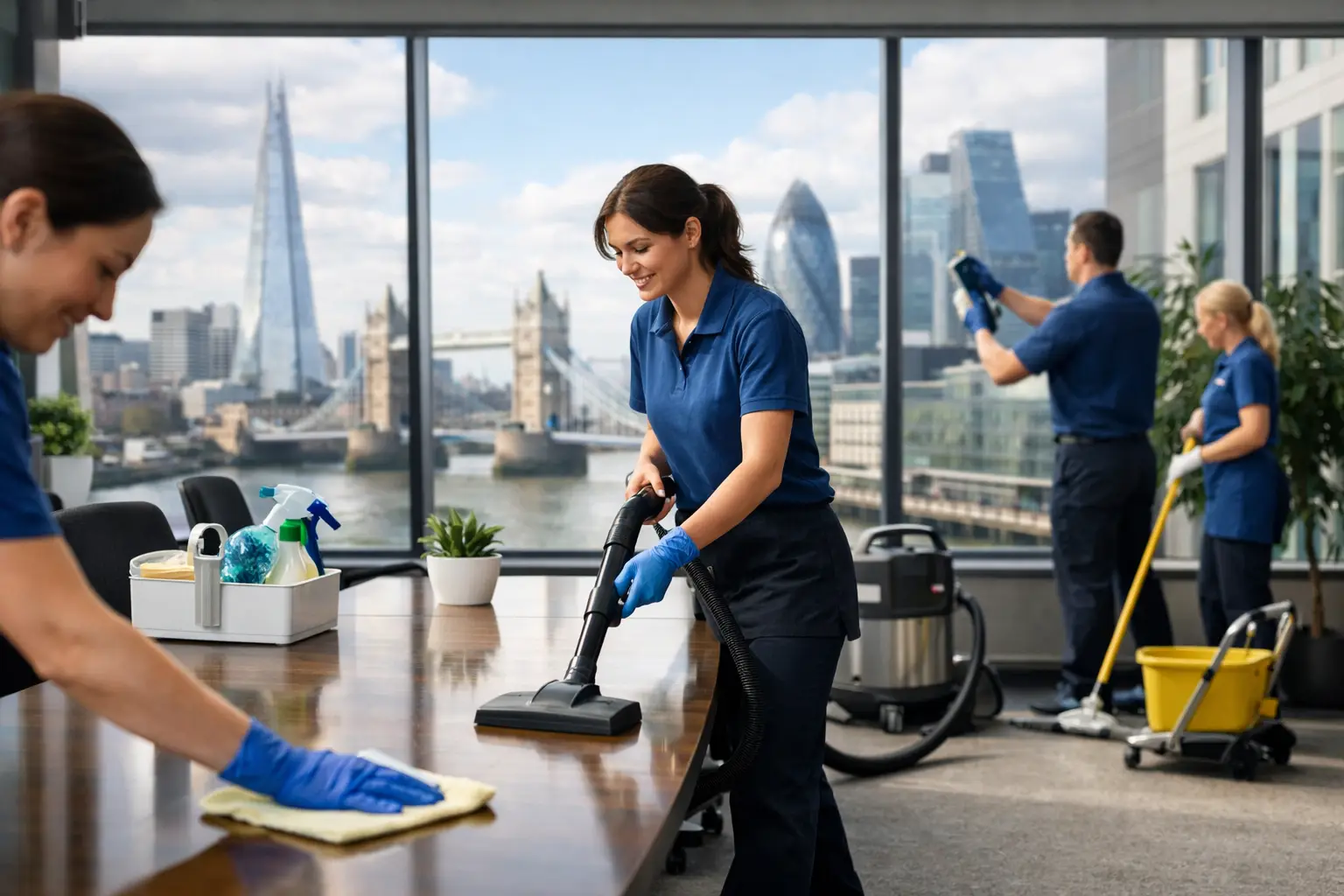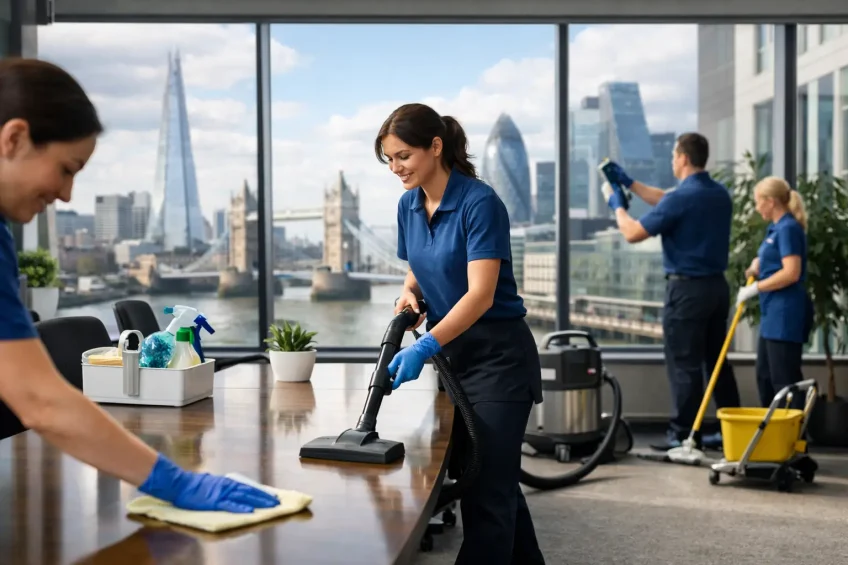
Commercial Cleaning Services London Can Rely On
The condition of a workplace is noticed before the first meeting begins. Dust on a reception desk, marked floors, poorly stocked washrooms or neglected touchpoints can quickly undermine confidence in an otherwise well-run business. Commercial cleaning services London organisations choose should do more than make a building look presentable – they should help keep it safe, functional and ready for the working day.
For facilities managers, office managers and directors, the right cleaning provider reduces pressure rather than creating another contract to manage. That calls for a service built around the realities of the site: occupancy levels, building access, sensitive equipment, visitor expectations, compliance requirements and the changing demands of a busy London workplace.
Why commercial cleaning is an operational investment
Cleaning is often discussed as a routine cost, but its effect reaches much further. A consistently maintained environment supports staff wellbeing, protects finishes and furnishings, improves visitor perception and helps facilities teams maintain control of their premises. It also creates a cleaner baseline from which to respond to seasonal illness, building works, spills and unexpected operational demands.
London buildings present particular challenges. Offices may have shared entrances, limited service access, high footfall, extended operating hours and multiple tenants with different requirements. A standard checklist applied without thought is unlikely to address those variables. A tailored plan, supported by clear supervision and regular communication, is more likely to deliver the consistency that professional premises require.
The value is especially clear when cleaning is planned around the building rather than fitted into a supplier’s preferred schedule. Early-morning attendance may suit a client-facing office, while daytime cleaning can be appropriate for washrooms, shared kitchens and high-touch areas. For some sites, a blended approach gives the best result.
What to expect from commercial cleaning services in London
A capable commercial cleaning partner begins by understanding how a site operates. That means surveying the premises, identifying priority areas and agreeing a scope that reflects the actual risk, traffic and presentation standards of the building. Reception spaces, meeting rooms, workstations, washrooms, kitchens and circulation areas should not all be treated as if they have the same needs.
A good cleaning specification also makes responsibilities clear. It should set out cleaning frequencies, task standards, access arrangements, consumables, escalation procedures and reporting. This provides facilities teams with a practical reference point and helps avoid the common problem of assumptions becoming service gaps.
Reliable people make the difference
Equipment and cleaning products matter, but the people delivering the service remain central to its quality. Trained, properly supported operatives are more likely to understand site procedures, work safely around employees and visitors, and take pride in the detail that can be missed during a rushed clean.
Continuity also has real value. Teams that know a building can work more efficiently, recognise when something is out of place and respond appropriately to local requirements. Where cover is needed, it should be organised without lowering standards or leaving the client to chase attendance.
Staff training should include safe working methods, product use, manual handling, infection-control procedures and site-specific instructions. For corporate premises, discretion and professional conduct are equally important. Cleaning teams often work outside normal hours or in areas containing confidential material, valuable equipment and restricted access.
Quality control should be visible
A cleaning contract should not depend on a manager noticing problems after they have occurred. Formal quality-control processes create accountability through scheduled inspections, audit records, feedback channels and responsive corrective action. The detail of that system will vary by site, but the principle is straightforward: performance needs to be measured, discussed and improved.
For a single office, regular supervisor checks may be sufficient. Larger or multi-site operations may need more structured reporting against agreed standards and service-level expectations. It depends on the complexity of the estate, but every client should know who is responsible for the contract and how issues will be resolved.
The specialist services that protect your premises
Daily office cleaning is the foundation, yet many buildings need specialist support to remain in good condition over time. Bringing these requirements together under one accountable provider can make facilities management simpler and ensure tasks are scheduled before they become disruptive or expensive.
Carpet cleaning and hard-floor maintenance are good examples. Carpets hold dirt and can lose their appearance quickly in high-traffic areas, while hard floors may require periodic machine cleaning, polishing or protective treatment. The correct method depends on the material, usage and finish. Over-cleaning with unsuitable products can damage a surface just as readily as neglect.
Window cleaning helps maintain the external presentation and natural light of a workplace. Post-build cleaning is essential after refurbishment or construction work, when fine dust and residue can affect both appearance and air quality. Deep cleaning provides a focused reset for kitchens, washrooms, neglected spaces or areas following intensive use.
Specialist environments need particular care. Server rooms and IT equipment should be cleaned using methods designed to minimise dust and avoid damage to sensitive systems. Computer and workstation cleaning can improve the condition of shared equipment, particularly where hygiene and appearance are both priorities. In situations requiring enhanced hygiene controls, electrostatic disinfection may be appropriate as part of a broader cleaning and infection-control plan, rather than a substitute for routine cleaning.
Washroom services, laundry arrangements and janitorial supplies can also sit within the wider contract. When these services are managed together, site teams spend less time dealing with separate suppliers, stock shortages and avoidable administration.
Compliance is part of the service, not an add-on
Commercial cleaning carries clear health and safety responsibilities. Clients should expect their provider to work in line with relevant COSHH procedures, use suitable products and maintain appropriate documentation for the tasks being carried out. Risk assessments, method statements and safe storage arrangements are not paperwork for its own sake. They help protect cleaners, employees, visitors and the client organisation.
Recognised quality and environmental management standards can provide further reassurance, particularly for organisations with formal procurement requirements. However, credentials should be supported by day-to-day discipline. The practical test is whether teams follow the agreed processes, supervisors check the work and concerns are acted on promptly.
Environmental considerations should be approached with the same care. Using products responsibly, managing waste appropriately and avoiding unnecessary consumption are sensible measures, but cleaning effectiveness and safety must remain central. The best approach balances environmental awareness with the hygiene and presentation standards a commercial site needs.
How to choose the right provider
Price matters, but the lowest quote can prove costly if it relies on insufficient labour, unclear scope or inconsistent cover. When comparing proposals, look beyond the total figure. Ask how staffing hours have been calculated, who will supervise the contract, how quality checks will be recorded and what happens when a cleaner is absent.
It is also worth discussing flexibility before it is needed. Businesses change: teams grow, office layouts are altered, events are held and refurbishment work takes place. A supplier should be able to adjust the service without turning every change into a lengthy contractual issue.
For a London office, local understanding is useful too. Travel patterns, building access restrictions and the timing of deliveries can all affect how reliably a service is delivered. A provider with established teams and operational coverage across London and the South East is better placed to plan around those realities.
EDM Cleaning takes a partnership-led approach, combining tailored plans with trained operatives, specialist services and documented quality control. The aim is not simply to complete a list of tasks, but to provide dependable support that makes the facilities function easier to manage.
A cleaner workplace starts with a clearer brief
Before appointing a provider, take time to identify what good looks like for your premises. Consider the areas that shape first impressions, the spaces that experience the heaviest use, the specialist assets that need protection and the standards your employees and visitors should be able to expect.
A clear brief gives a cleaning partner the information needed to build a realistic service plan, allocate the right people and monitor performance properly. When cleaning is treated as part of workplace readiness rather than an afterthought, the result is a building that supports the people and business inside it every day.