Commercial Washroom Service Plans That Work
A washroom can be cleaned thoroughly at 6am and still feel neglected by lunchtime. In a busy office, shared building or client-facing workplace, soap runs out, paper bins fill, odours develop and small faults become highly visible. Well-designed commercial washroom service plans prevent these issues through a managed routine that reflects how a building is actually used – not a generic cleaning schedule.
For facilities and operations teams, the objective is straightforward: provide a clean, stocked, safe and presentable washroom throughout the working day, while reducing the need for constant checks, emergency requests and supplier chasing. Achieving that consistency takes more than occasional cleaning. It requires the right scope, reliable operatives, clear quality controls and a plan that can adapt when occupancy changes.
What commercial washroom service plans should cover
A commercial washroom plan should bring daily hygiene, consumable management and periodic servicing into one accountable programme. The exact requirements vary by site, but the service should set out who does what, when it happens and how standards are checked.
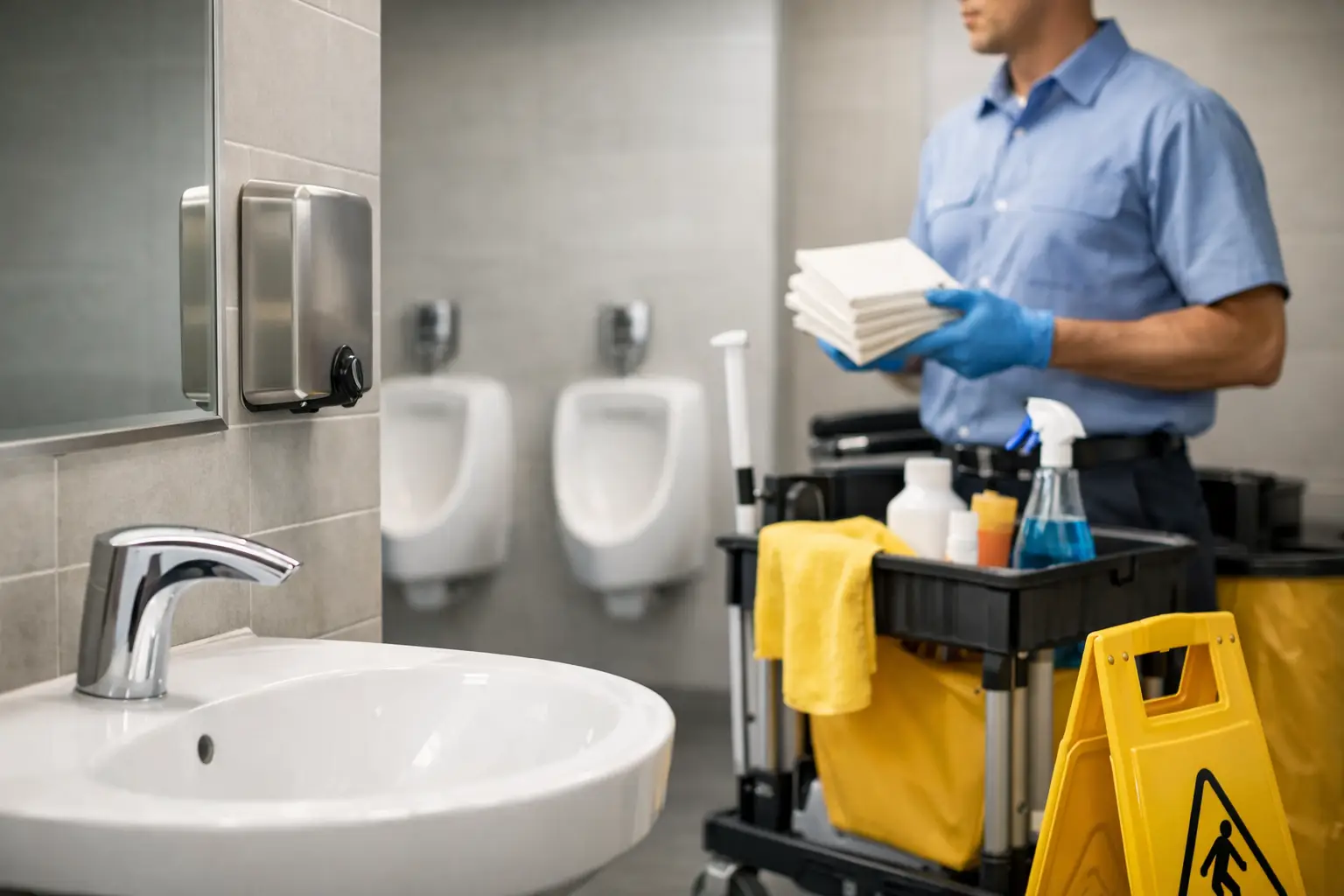
Routine cleaning normally covers toilets, urinals, basins, taps, mirrors, cubicles, doors, floors and high-touch surfaces. Cleaning frequencies should reflect use, not simply the size of the washroom. A small washroom serving a high-occupancy floor may need more attention than a larger but lightly used facility.
Consumables need the same level of planning. Hand soap, toilet tissue, hand towels or hand-drying supplies, sanitary products and bin liners should be replenished before they become a problem. A dependable service also accounts for the condition of dispensers. An empty dispenser is frustrating; a damaged, leaking or poorly positioned one affects both hygiene and the perception of the workplace.
Where sanitary waste services are included, the plan should clearly define the exchange frequency, unit locations and waste handling process. This is an area where duty of care matters. Facilities managers need confidence that units are serviced discreetly, hygienically and in accordance with the appropriate waste arrangements.
Odour control may also be appropriate, particularly in enclosed washrooms, shower areas or locations with sustained footfall. However, fragrance should not be used to mask a cleaning issue. The underlying cause could be a missed clean, inadequate ventilation, a blocked drain, incorrect bin servicing frequency or a maintenance fault. A good provider identifies and reports the issue rather than treating the symptom alone.
Start with the building’s real pattern of use
The best washroom plans are based on a site assessment. This looks beyond the number of cubicles to understand who uses them, when demand peaks and what could affect service delivery. In Central London workplaces, for example, usage can change sharply on office attendance days, during events, after client meetings or when several floors share facilities.
Consider the number of employees and visitors, opening hours, public access, shift patterns, shower provision and the availability of accessible facilities. A washroom near reception may need a different standard and inspection frequency from one in a back-office area. Likewise, a washroom used by contractors, delivery teams or a changing workforce can require more resilient consumable levels.
It is also worth assessing the practical details that can disrupt a routine. Are stores close to the washrooms? Are consumables compatible with existing dispensers? Does the cleaning team have access outside busy periods? Are there building rules around waste collection, loading access or security clearance? Resolving these questions at the outset makes service more reliable and limits unnecessary administrative work later.
Match frequency to risk, not assumption
There is no single correct visit frequency. Some sites benefit from a full clean before staff arrive and a daytime attendant or inspection round during peak hours. Others need a daily clean with targeted replenishment visits. Lower-occupancy premises may require less frequent attention, provided inspections and stock levels remain appropriate.
The key is to separate cleaning frequency from checking frequency. A washroom may not require a full re-clean after every busy period, but it may need soap, paper, bins and visible surfaces checked. This distinction creates a practical plan that protects standards without duplicating work.
Seasonal changes also matter. Winter illness, summer events, office moves and changes to hybrid working can all affect demand. A flexible provider should be able to review the schedule and adjust service levels when the building’s needs change.
Build in quality control and clear accountability
A service plan is only useful if performance can be seen and managed. Facilities teams should expect clear communication routes, defined supervisory responsibility and regular checks against an agreed specification.
On-site checklists can support consistency when they are used properly. They should identify the areas inspected, the tasks completed, stock replenished and any issue requiring escalation. Digital reporting can be particularly useful across multi-floor or multi-site estates, giving managers a clearer record of completed work and recurring concerns.
Quality control should also include periodic supervisor inspections. These look beyond whether a task has been ticked off and assess presentation, hygiene standards, stock management and operative performance. If a washroom repeatedly runs out of towels, for example, the solution may be a changed replenishment level or visit time rather than another reminder to the cleaning team.
A productive service relationship also defines escalation. Cleaning operatives are often the first people to notice damaged fittings, leaking pipes, drainage issues, failed lights or poor ventilation. The plan should establish how these faults are reported, who receives the information and what action is expected. This helps protect the condition of the washroom and prevents hygiene concerns becoming wider building-maintenance problems.
Hygiene standards depend on people and process
Washroom servicing is visible work, but it also demands sound procedures. Operatives need training in safe chemical use, colour-coded equipment where applicable, hand hygiene, waste handling and infection-control practices. They should understand how to clean and disinfect without cross-contamination, and how to work respectfully in occupied premises.
Products and methods should be suitable for the surfaces and fixtures on site. Harsh chemicals can damage finishes, while unsuitable products may leave residue, create slip risks or fail to address the relevant hygiene concern. COSHH information, safe storage and correct dilution procedures should be part of everyday service management, not paperwork held away from the workplace.
For larger corporate premises, staff presentation and conduct are equally important. Operatives may work around employees, visitors and senior stakeholders. A well-supported team, familiar with the site and its expectations, is more likely to spot issues early and deliver a professional experience without disrupting the working day.
Choose a plan that supports wider facilities operations
Washroom services should not sit separately from the rest of the cleaning contract. They affect reception standards, employee wellbeing, visitor confidence and the overall readiness of the building. Bringing washroom cleaning, consumables, periodic deep cleaning and janitorial support into a coordinated service can make oversight simpler for the facilities team.
This does not mean every site needs the same broad scope. A single-tenant office may need a straightforward programme with daily cleaning and managed supplies. A multi-let building, corporate headquarters or high-footfall workplace may benefit from more frequent inspections, dedicated daytime support and closer reporting. The right arrangement depends on operational risk and the standard the organisation wants to maintain.
Environmental considerations should also be practical. Thoughtful ordering and stock control can reduce avoidable waste, while appropriate dispenser systems can prevent excessive consumption. Cleaning providers should use products and processes responsibly, but sustainability should never compromise hygiene, safety or the service experience.
EDM Cleaning approaches washroom services as part of a wider facilities partnership, with tailored specifications, trained operatives and formal quality systems designed to make site management easier. For buildings where standards must remain consistent, this level of structure creates confidence that the washroom will be ready for the next employee, visitor or working day.
A washroom rarely attracts praise when it is working well, and that is the point. The strongest service plan keeps hygiene, stock and presentation under control so reliably that facilities managers can focus attention where it is needed most.