Out of Hours Office Cleaning That Keeps Work Moving
The first people to judge an office are often the first to arrive. A marked reception floor, overflowing washroom bin or dusty meeting room can immediately suggest that standards are slipping. Out of hours office cleaning gives facilities and operations teams the confidence that the workplace will be clean, safe and ready before the next working day begins, without disrupting the people using it.
For busy London offices, cleaning outside core hours is not simply a matter of convenience. It is a practical way to protect productivity, maintain presentation and support a consistent employee and visitor experience. The right arrangement should fit around the building, its security requirements and the way its teams actually work.
Why out of hours office cleaning supports better operations
Daytime cleaning can have a place in a workplace, particularly for washroom checks, spill response and front-of-house touchpoints. However, routine cleaning carried out while the office is occupied can introduce avoidable disruption. Vacuums, waste collection, floor-care equipment and access to desks all compete with meetings, focused work and visitor activity.
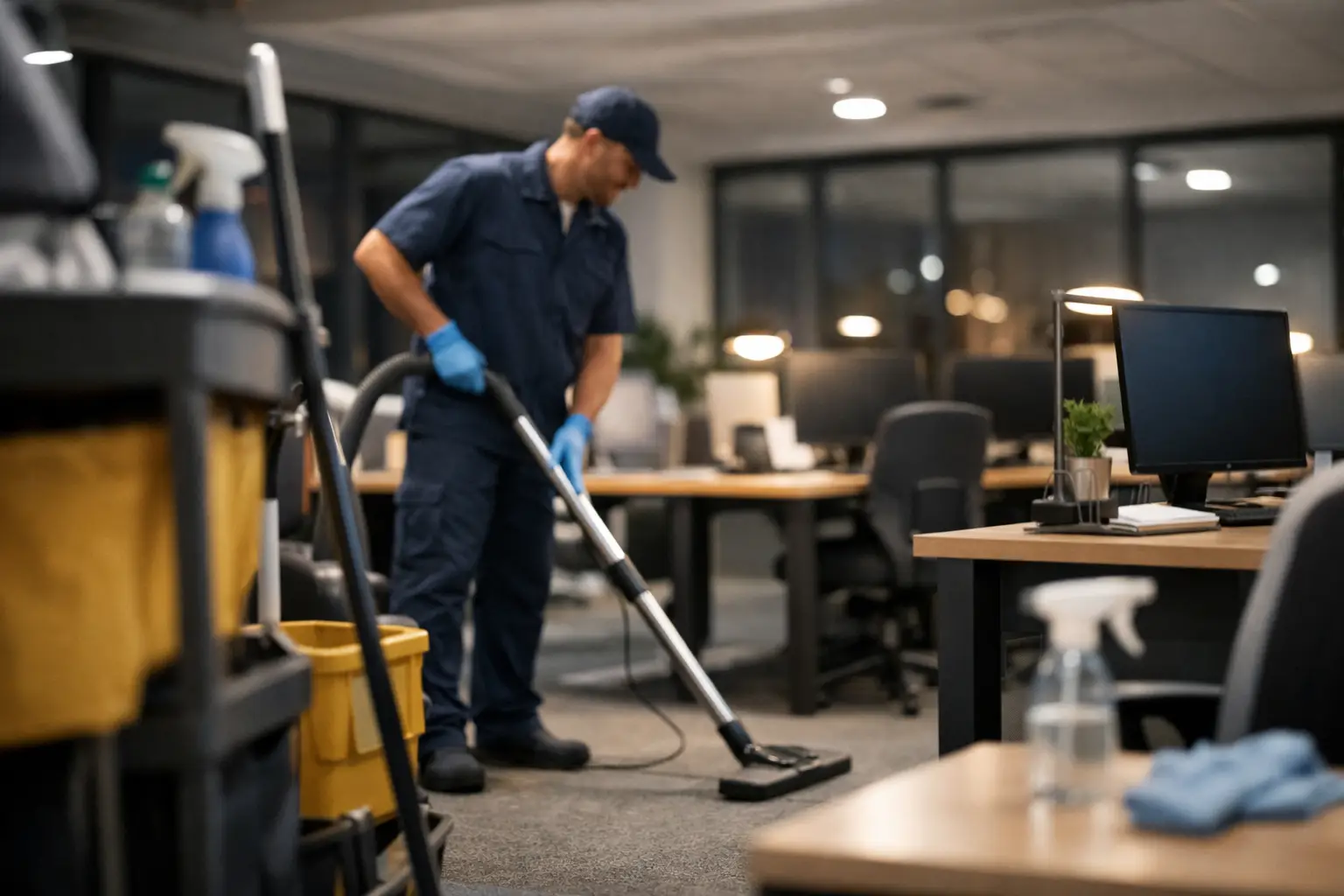
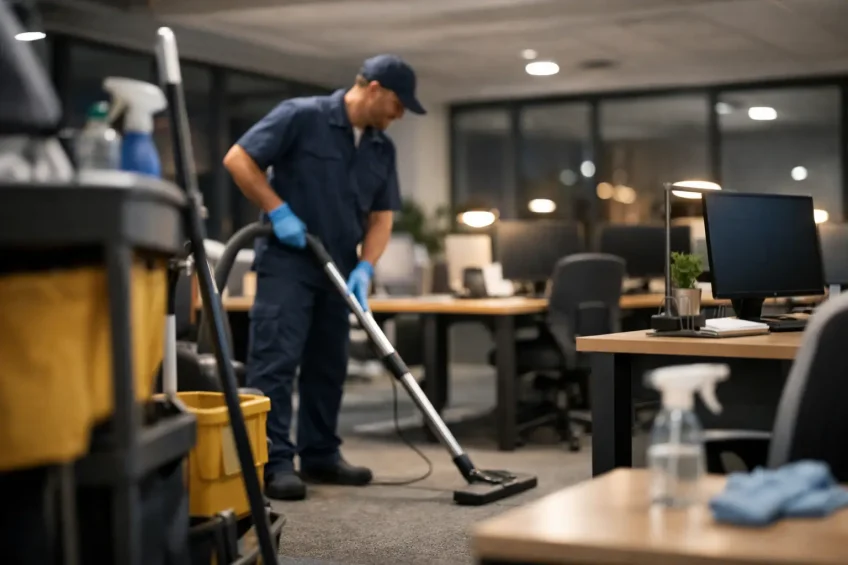
An out of hours schedule allows cleaning operatives to work methodically through agreed areas when they are clear. Desks can be cleaned thoroughly, carpets vacuumed, washrooms serviced and communal spaces reset without staff moving around the building. The result is a better cleaning window and a more orderly start to the day.
This is particularly valuable in corporate headquarters, multi-tenanted buildings and offices with regular client meetings. A workplace may be used differently from one day to the next, but its standard of cleanliness should remain dependable. Consistent overnight or evening cleaning creates that baseline.
It also supports facilities teams by reducing the need for daily coordination. When access procedures, cleaning specifications and escalation routes are agreed from the outset, the service becomes a reliable part of building operations rather than another task to supervise closely.
Designing an out of hours office cleaning plan
A standard checklist rarely reflects the realities of a working office. The most effective cleaning plan begins with a site assessment that considers occupancy, layout, finishes, high-use areas and the times at which spaces become available.
A City office with client-facing meeting suites may need special attention to reception areas, glass partitions and washrooms each evening. A workplace with collaborative kitchens may require more frequent cleaning of surfaces, appliances and waste points. Offices with shift workers, late meetings or 24-hour operations may need a phased programme rather than one fixed cleaning visit.
Start with the workplace journey
Consider the building in the order employees and visitors experience it. Entrances, reception desks, lift lobbies, corridors and meeting rooms shape the first impression. Washrooms, kitchens and break-out areas influence how staff experience the workplace throughout the day. Back-of-house rooms, stores and service areas may be less visible, but their condition affects hygiene, safety and operational efficiency.
A tailored specification should set out what is cleaned, how often it is cleaned and the required standard for each area. This avoids assumptions and makes it easier to monitor service quality over time. It should also account for periodic tasks such as carpet cleaning, hard-floor maintenance, internal glass cleaning and deep cleaning, rather than treating them as afterthoughts.
Match the hours to the building
Out of hours does not always mean the same thing. For some offices, the most suitable window is early evening, once most staff have left. For others, overnight cleaning offers the least disruption and allows sufficient time for detailed work. Weekend cleaning can be useful for larger periodic tasks, post-event resets or areas that cannot be taken out of use during the week.
The best choice depends on occupancy patterns, access arrangements and security protocols. Cleaning teams should be able to work within agreed access controls, including sign-in procedures, alarm protocols, keyholding requirements and restrictions around sensitive spaces. A clear process protects both the client and the cleaning team.
Quality control matters when the office is empty
Because out of hours cleaning is often completed when managers are not on site, accountability is essential. A professional provider should not rely on the assumption that no news means everything is satisfactory. Regular inspections, documented checks and open reporting give facilities managers visibility of the service without creating extra administration.
Quality control works best when it combines routine supervision with a practical route for raising and resolving issues. If a meeting room has been used unexpectedly, a washroom requires additional attention or a consumable is running low, the response should be clear and timely. Small issues are easier to resolve before they become recurring complaints.
Trained operatives are central to this. Office environments contain varied surfaces and equipment, from stone floors and glass partitions to keyboards, monitors and specialist IT areas. Using the wrong product or method can cause damage, leave residue or create hygiene risks. Cleaning staff need task-specific training, appropriate equipment and a clear understanding of the site specification.
For workplaces handling sensitive information, discretion is equally important. Operatives should understand desk-clearing expectations, confidential waste arrangements and which areas require restricted access. A well-managed service respects the workplace as a professional environment, not simply a collection of rooms to clean.
Health, safety and environmental responsibility
Cleaning after hours does not remove health-and-safety responsibilities. It can introduce different considerations, particularly where teams are working in quieter buildings, using equipment on floors or dealing with chemical products without normal daytime footfall.
A considered service should include site-specific risk assessments, COSHH procedures, safe storage of materials and clear methods for reporting hazards. Floor cleaning, for example, must be scheduled and managed so that areas are dry and safe before staff return. Waste handling should follow the building’s procedures, with recycling arrangements supported where available.
Environmental performance also deserves attention. The aim is not merely to use products labelled as environmentally friendly, but to control product use, reduce unnecessary waste and select methods that are appropriate for the surface and task. Microfibre systems, measured chemical dosing and well-maintained equipment can all support effective cleaning with less avoidable consumption.
EDM Cleaning works to ISO 9001, ISO 14001 and ISO 45001 standards, reflecting the connection between service quality, environmental management and occupational health and safety. For clients, these systems provide useful assurance that cleaning is being managed as a planned operational service.
When daytime support is still necessary
An out of hours programme should not be expected to cover every requirement. Some workplaces benefit from a small daytime presence for washroom checks, replenishment of consumables, clearing spillages or maintaining busy front-of-house areas. This is common in offices with high visitor numbers, extended opening hours or heavily used communal facilities.
The most practical model is often a combination: a thorough evening or overnight clean, supported by targeted daytime attendance where the building needs it. This approach maintains standards throughout the day while reserving more intensive work for the periods when it can be completed properly.
It is also worth planning for change. A return-to-office initiative, new floor layout, refurbishment project or increase in headcount can alter cleaning requirements quickly. A flexible provider should review the programme with the client and adjust resources, timing or specialist support before standards are affected.
Questions to settle before the service begins
The handover into an out of hours arrangement should be detailed but straightforward. Facilities managers should agree the cleaning scope, access rules, security contacts, reporting process and escalation route for urgent matters. The provider should know which spaces are high priority, what cannot be moved, where supplies are stored and who can authorise changes.
It is useful to establish how performance will be reviewed. Regular communication does not need to be lengthy, but it should be purposeful. Inspection findings, recurring issues, planned periodic work and changing building needs are all worth discussing. This partnership approach helps keep the cleaning plan aligned with the workplace rather than allowing it to become static.
A clean office is rarely noticed when it is done well, because it allows everyone else to focus on their work. That is the value of a properly managed out of hours service: each morning begins with a workplace that is prepared, presentable and ready to support the day ahead.