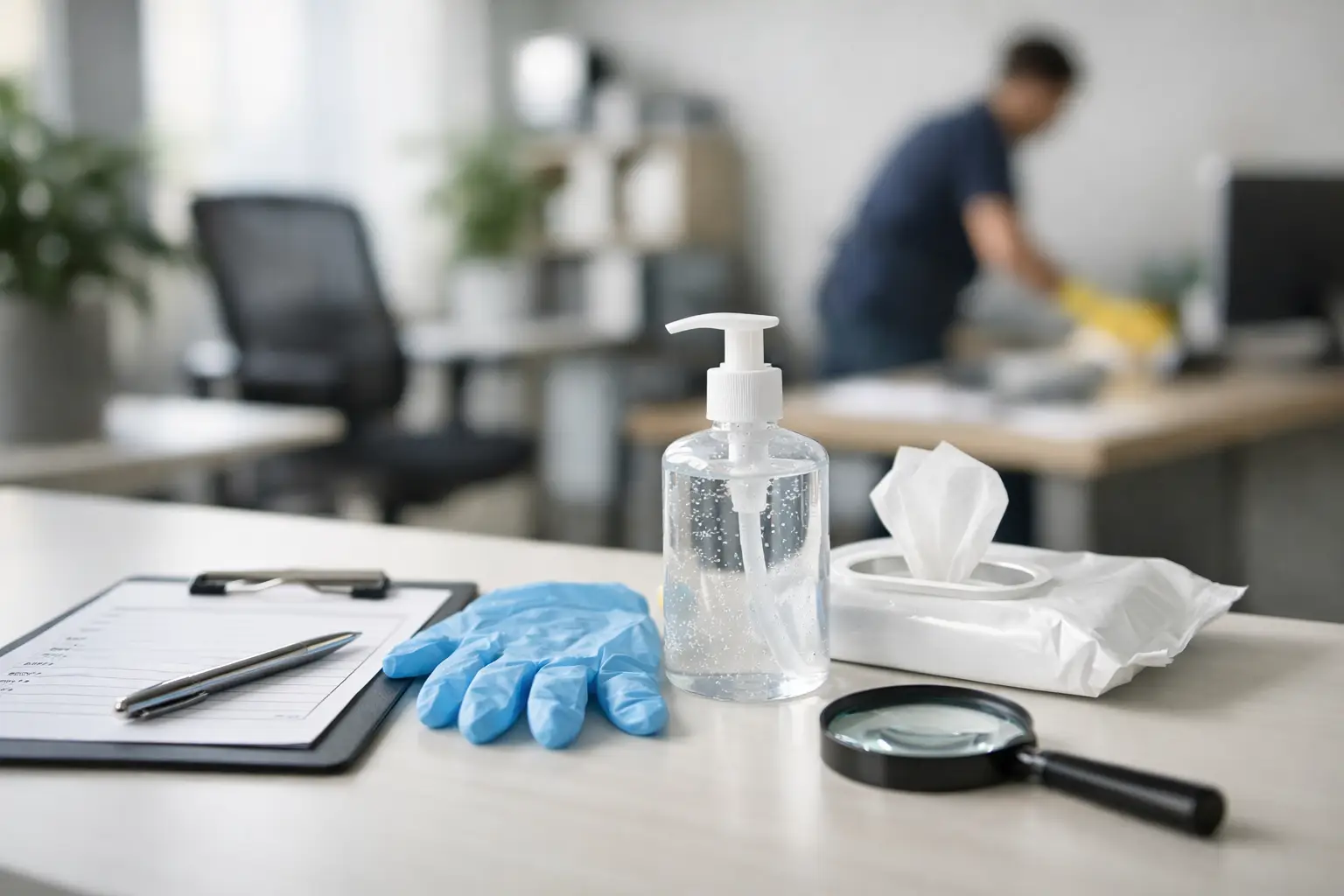
Workplace Hygiene Risk Assessment Guide for Offices
A workplace hygiene risk assessment guide should begin where the working day actually happens: at shared desks, reception touchpoints, washrooms, kitchens, meeting rooms and the routes people take between them. For facilities managers, the aim is not to produce a document that sits in a folder. It is to understand where hygiene failures could affect people, presentation or business continuity, then put practical controls in place that can be checked.
A well-managed assessment gives cleaning teams, site managers and occupiers a shared standard. It clarifies what needs cleaning, how often, by whom and how good looks on a particular site. That is particularly valuable in busy London offices, where changing occupancy, visitor traffic and flexible working can quickly alter the hygiene demands of a building.
What a hygiene risk assessment should achieve
Workplace hygiene is broader than visible cleanliness. A polished reception floor does not, on its own, show whether washroom consumables are stocked, kitchen surfaces are hygienic, bins are managed correctly or high-contact points are being cleaned at suitable intervals.
Your assessment should identify credible hygiene hazards, evaluate who may be exposed, decide which controls are proportionate and record who is accountable for delivering them. It should also set a review cycle, because an assessment becomes less useful when site conditions change but the cleaning specification does not.
The process supports health and safety duties, but it also protects the everyday experience of employees, clients and visitors. Poor hygiene can lead to complaints, reduced confidence in the workplace, avoidable sickness absence and disruption for the facilities team. The right controls help prevent these issues before they become urgent requests.
How to carry out a workplace hygiene risk assessment
Start with the site, not a generic checklist
Walk the premises at the times it is genuinely in use. An early-morning inspection may show a tidy office but miss lunchtime kitchen congestion, a full washroom after a client event or the pressure placed on lifts and reception during peak arrivals.
Map the building by use rather than simply by floor. Reception, open-plan workspaces, boardrooms, tea points, washrooms, storage areas, changing facilities, loading areas and plant or server rooms all present different risks. Include less obvious spaces, such as printer stations, lockers, shared vehicles, first-aid points and areas where delivery teams enter.
Speak to the people who know the site. Reception staff may identify recurring issues at the front entrance, while office managers may know that one tea point is used far more heavily than another. Cleaning operatives can provide equally useful insight into access limitations, recurring spillages and areas that need more frequent attention than the written schedule suggests.
Identify hazards and the people affected
A hygiene hazard is anything that could contribute to contamination, illness, odour, pests, slips caused by poor cleaning practice or an unsuitable working environment. The risk may come from a surface, a process, a lack of supplies or the way a space is used.
Common areas to consider include:
- High-contact surfaces such as door handles, lift buttons, handrails, desk-sharing equipment, touchscreens and meeting-room controls.
- Washrooms, including sanitary fittings, dispensers, floors, waste units, ventilation and the availability of soap, hand-drying provision and toilet tissue.
- Kitchens and tea points, where food debris, waste, shared appliances and dirty crockery can create hygiene and pest-control concerns.
- Waste storage and removal routes, particularly where waste remains on site for extended periods or passes through occupied areas.
- Specialist environments such as server rooms, where unsuitable cleaning methods, dust build-up or excess moisture can affect sensitive equipment.
Consider who could be affected in each location. This may include employees, visitors, contractors, cleaning operatives, building management staff and people with particular vulnerabilities. A late-working team may use facilities after the main cleaning shift, for example, while a visitor may only encounter reception and washrooms but still form a strong impression of the organisation.
Evaluate the level of risk
Risk is usually assessed by considering likelihood and potential impact. A frequently used kitchen microwave with visible food residue may have a higher likelihood of becoming a problem than a seldom-used cupboard. A small issue in a critical client-facing area may also have a disproportionate operational impact.
Keep the scoring method straightforward and consistent. A simple low, medium or high rating is often sufficient for an office environment, provided it leads to a clear action. The point is not to create false precision. It is to prioritise attention where the combination of use, exposure and consequence makes stronger control necessary.
Take account of existing measures before deciding what else is needed. If washrooms already receive scheduled servicing, consumables are replenished and quality checks are documented, the remaining risk may be low. If the schedule exists but checks are irregular, access is unreliable or supplies frequently run out, the control is not operating as intended.
Put controls into the cleaning plan
Controls should be specific enough for a cleaning team to deliver and a facilities manager to verify. “Clean regularly” is not a workable instruction. “Clean and disinfect reception door handles, lift buttons and visitor-screen touchpoints at agreed intervals during occupied hours” gives the service a measurable purpose.
The most effective control is not always more cleaning. Sometimes the answer is better placement of bins, a revised waste collection time, additional hand-sanitiser at a busy entrance, separate cloths and equipment for washroom use, or clearer responsibilities for clearing kitchen items before the evening clean.
Cleaning products and methods must match the surface and task. This is essential for hard floors, stone finishes, IT equipment and server-room environments, where an unsuitable chemical or excess liquid can cause damage. Chemical use should be supported by COSHH assessments, correct dilution, safe storage, suitable personal protective equipment and operative training.
For high-risk or high-traffic areas, consider whether daytime cleaning or touchpoint support is needed alongside the main out-of-hours service. This depends on building occupancy, visitor numbers, the nature of the workplace and the level of service expected. A lightly occupied office may need a different approach from a corporate headquarters with continuous client meetings.
Make responsibilities and evidence clear
A risk assessment only works when ownership is visible. The facilities manager may retain overall responsibility, but the daily actions can sit across cleaners, reception teams, occupiers, security staff and building management. Set out who replenishes consumables, reports defects, responds to spillages, signs off quality checks and authorises changes to the specification.
Evidence should be proportionate, but it matters. Cleaning schedules, washroom service records, inspection forms, issue logs, training records and COSHH documentation provide assurance that controls are being applied. They also help identify patterns. Repeated complaints about one washroom, for instance, may reveal a supply issue, a timing problem or an underlying maintenance fault rather than a one-off cleaning failure.
A quality-control process should include both planned inspections and responsive feedback. Planned checks confirm that the agreed standard is being met. Feedback from occupiers and cleaning operatives highlights changes that a monthly audit may not catch. The strongest arrangements treat both as useful operational information, not as criticism.
Review when the workplace changes
Set a routine review date, normally at least annually, but do not wait for it if the building changes. Reassess following refurbishment, a change in occupancy, new tenants, altered working patterns, a significant hygiene complaint, a pest issue, an outbreak of illness or a change to cleaning products or methods.
Seasonal changes can also affect priorities. Wet weather may increase entrance-floor care requirements, while warmer periods can place more pressure on waste handling and kitchen hygiene. Events, office moves and post-build works may require a temporary plan that sits alongside the routine cleaning specification.
When reviewing, ask whether the existing controls are achieving the intended result. Are washroom stocks lasting between checks? Are high-contact points being addressed at the right time? Are cleaning operatives able to access all areas? Is the standard consistent across shifts? These practical questions are more useful than merely confirming that a form has been completed.
Use a cleaning partner as part of the control
For many facilities teams, the challenge is not identifying a hygiene risk. It is maintaining the response while managing multiple priorities across the building. A capable commercial cleaning partner can help translate assessment findings into site-specific schedules, trained-operatives’ instructions, approved product use and documented quality checks.
EDM Cleaning approaches this work as a facilities-support function, with tailored cleaning plans designed around how each workplace operates. Regular communication, supported operatives and accountable inspection processes make it easier to adjust the service when the site changes, without losing sight of agreed standards.
A useful assessment should make the next action obvious. If it shows that a busy tea point needs a revised service frequency, a washroom needs tighter stock checks or a server room needs specialist cleaning controls, act on that finding and confirm the result. That is how hygiene management becomes a dependable part of workplace readiness rather than a task addressed only when something goes wrong.