Electrostatic Disinfection for Offices Explained
A busy office can look clean while still carrying hygiene risks across the places people touch most often: door furniture, lift buttons, shared desks, meeting-room controls and kitchen equipment. Electrostatic disinfection for offices gives facilities teams a controlled way to apply an approved disinfectant across these complex, high-contact surfaces, supporting workplace readiness without disrupting the working day unnecessarily.
For office and property managers, the value is not simply the equipment. It is the ability to introduce a specialist hygiene measure at the right time, with trained operatives, appropriate chemicals, clear procedures and evidence that the service has been completed properly.
What electrostatic disinfection does in an office
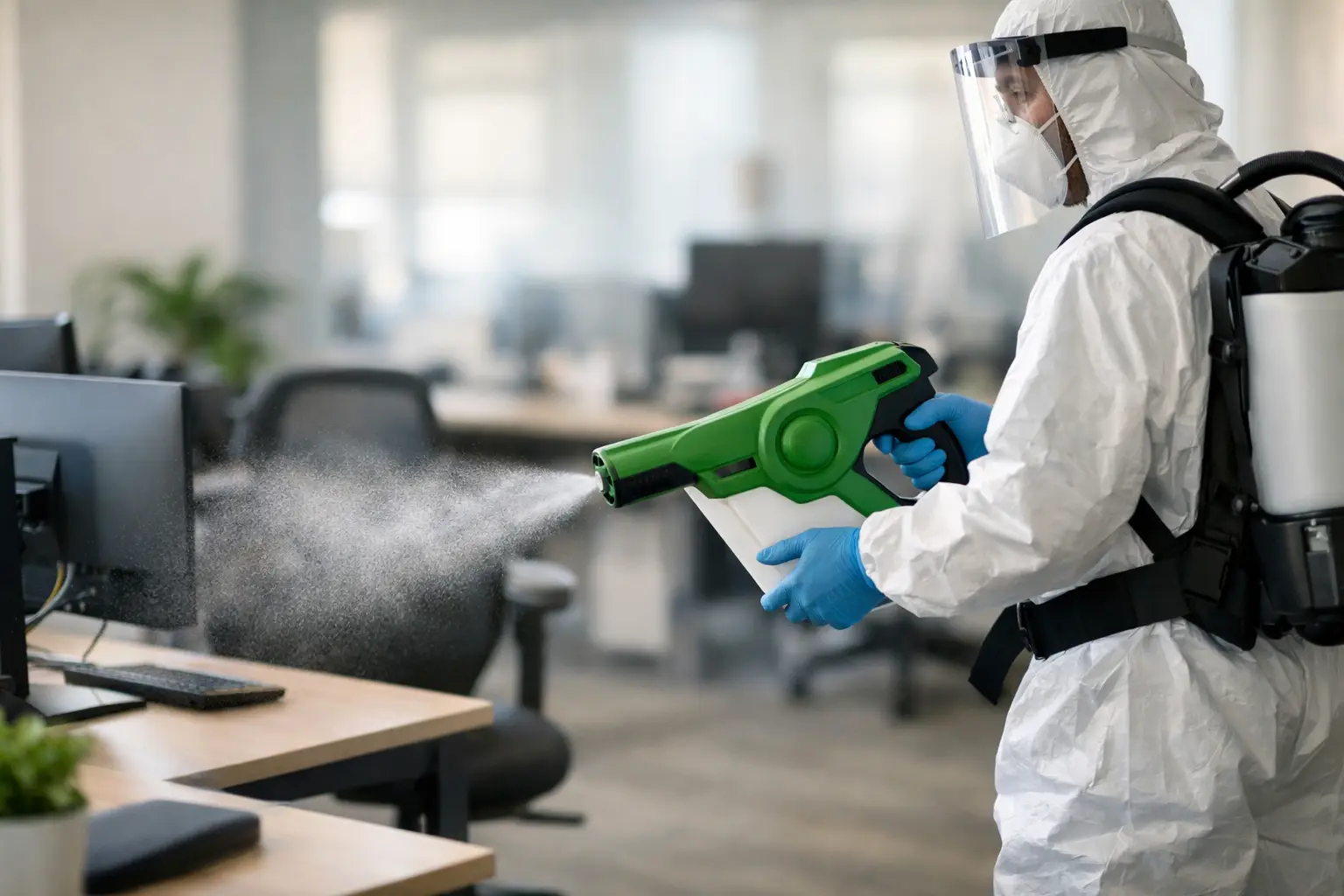
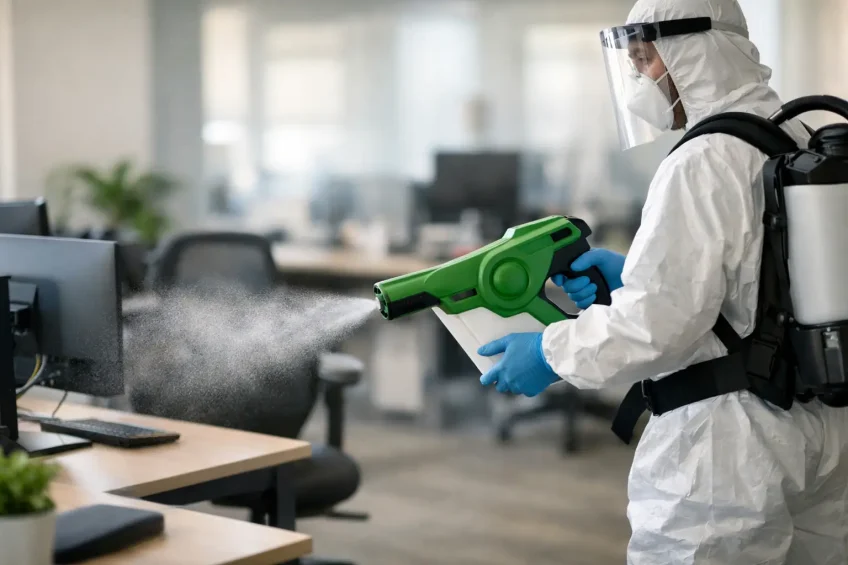
Electrostatic disinfection uses a specialist sprayer to apply a fine mist of disinfectant with an electrical charge. The charged droplets are attracted to surfaces, helping the product wrap around and settle on areas that can be awkward to reach with a conventional spray or cloth alone. This is particularly useful around chair frames, desk edges, handles, screens, switches and other detailed office fixtures.
The process should not be confused with a substitute for cleaning. Dust, spills, food residue and visible dirt can prevent a disinfectant from contacting a surface effectively. A professional programme therefore begins with the right level of routine or deep cleaning, followed by disinfection where it is appropriate to the site’s risk profile.
Used correctly, the method can make coverage more consistent across a large workspace. Used carelessly, it can create unnecessary wetness, miss required contact times or place product on sensitive equipment. The difference lies in planning, product selection and operative competence.
When electrostatic disinfection for offices is appropriate
This service is often scheduled after a reported illness, a period of unusually high occupancy, a refurbishment, or an event that has brought many visitors through a building. It can also form part of a planned enhanced hygiene programme for organisations with shared workstations, client-facing reception areas, high-density meeting spaces or staff amenities used throughout the day.
There is no single timetable that suits every building. A small office with assigned desks may require a different approach from a multi-floor headquarters operating hot-desking, hosting visitors and using communal kitchens from early morning until late evening. Facilities managers should consider footfall, layout, shared touchpoints, vulnerable users, cleaning frequency and business continuity requirements before deciding how often a specialist disinfection treatment is needed.
It is also sensible to distinguish between a targeted response and a whole-site treatment. If an issue is limited to one meeting room, washroom or team area, a focused intervention may be the most practical course. Where there is an operational reason to reassure staff and visitors across the building, broader treatment can support a consistent standard.
The areas that need careful attention
An effective treatment plan reflects how people actually use the premises, rather than simply following a room-by-room checklist. Reception counters, access-control panels and lift controls are obvious priorities. Yet the smaller items can be just as relevant: cupboard pulls, printer touchscreens, coffee-machine buttons, fridge handles and shared stationery points.
Meeting rooms require particular attention because they combine high turnover with shared technology. Table surfaces, chair arms, presentation controls, video-conferencing equipment and whiteboard markers may all need to be considered. In agile offices, desk booking panels and locker handles can be equally important.
IT and specialist spaces need a different method
Computers, server rooms and other sensitive environments should never be treated on assumption. Electronics require carefully controlled application, compatible products and, in some cases, a different cleaning method altogether. The aim is to support hygiene without introducing moisture, residue or operational risk to valuable equipment.
A competent provider will survey these areas in advance, identify exclusions and agree the correct procedure with the facilities or IT team. This is one reason electrostatic disinfection works best as a managed service rather than a one-size-fits-all exercise.
Safe delivery depends on preparation
Before any treatment begins, the team should understand the site, its occupancy pattern and its health and safety requirements. That includes confirming the disinfectant is suitable for the intended surfaces, reviewing Safety Data Sheets, following COSHH controls and setting out any required drying or re-entry period. Occupants need clear notice so that work can be completed safely and with minimal interruption.
Preparation also means protecting the surrounding operation. Food should be covered or removed from treatment areas, confidential papers secured and sensitive equipment identified. Where cleaning takes place out of hours, access arrangements, alarm procedures and handover responsibilities should be agreed in advance.
The disinfectant must remain on the surface for its stated contact time to perform as intended. This practical detail is easily overlooked. Applying product quickly does not automatically mean disinfection has been completed correctly. Operatives need enough time, the right application rate and the discipline to follow the manufacturer’s instructions.
What facilities managers should expect from their provider
A specialist disinfection visit should be clear, accountable and proportionate to the building. The provider should be able to explain which areas are included, what preparation is required, the products and equipment being used, and any limitations of the treatment. Vague promises of a fully sanitised workplace are not a substitute for a defined scope of work.
Quality control matters after the treatment as well as before it. Depending on the agreed arrangement, this can include an operative record, area checklist, supervisor inspection and confirmation of completion for the facilities team. These records help managers demonstrate that the planned hygiene measure has been carried out and provide a useful reference if requirements change.
Training is equally important. Operatives should understand chemical handling, safe spraying techniques, cross-contamination controls and the needs of occupied commercial premises. A provider working within recognised quality, environmental and occupational health and safety systems is better placed to make specialist work part of a dependable wider cleaning operation.
How it fits with everyday office cleaning
Electrostatic disinfection is most effective when it supports, rather than distracts from, the basics. Regular cleaning of washrooms, kitchens, workstations, floors and touchpoints remains the foundation of a well-managed workplace. Good hand-hygiene facilities, sensible waste management and prompt attention to spills also have a direct effect on the standard employees experience each day.
For this reason, the best plans combine routine cleaning with targeted enhanced measures. A reception area may need frequent manual cleaning throughout the day, while electrostatic treatment is reserved for an agreed after-hours schedule or specific operational trigger. This approach avoids unnecessary chemical use while maintaining a practical level of protection.
Environmental considerations should form part of the discussion. More product is not always better. Using approved products at the correct dilution and volume, applying them precisely and avoiding repeat work where it is not needed helps to balance hygiene objectives with responsible facilities management.
Supporting confidence without making unrealistic claims
Employees and visitors notice when an office is cared for. Clean entrance points, orderly shared spaces and well-maintained washrooms contribute to confidence in the organisation behind them. A planned disinfection service can reinforce that confidence, particularly after an incident or during periods of increased concern.
However, communication should remain factual. Electrostatic treatment reduces reliance on missed touchpoints by improving application coverage, but it cannot remove every risk from a live workplace. People continue to touch surfaces, visitors continue to arrive and routines still matter. Clear messaging about cleaning measures, along with practical expectations for occupants, is more credible than overstating what any single service can achieve.
For London offices managing demanding footfall, varied working patterns and high presentation standards, a tailored programme is usually the sensible answer. EDM Cleaning can assess the working environment, coordinate specialist disinfection with daily cleaning and provide the documented, well-managed support that makes a facilities manager’s role easier. The right treatment is the one that fits your building, protects its people and leaves the workplace ready for the next business day.